Moth Heat Treatments in Bridge CT4
Single-visit, chemical-free thermal treatment that kills clothes moths, carpet moths, larvae and eggs deep inside wardrobes, carpets and wool textiles across Bridge and the wider Kent area.
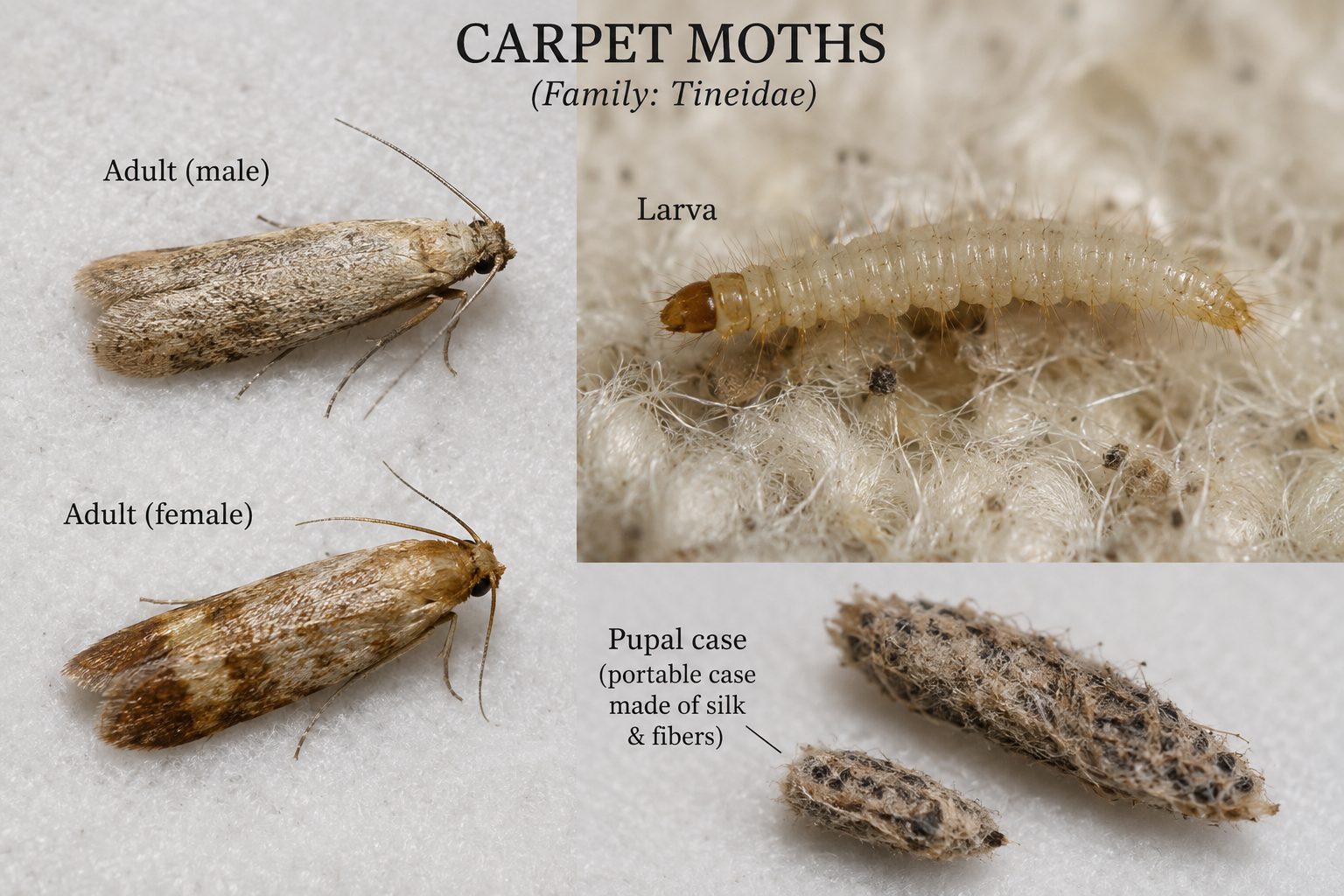
- Common Clothes MothTineola bisselliella
- Case-bearing Clothes MothTinea pellionella
- Brown House MothHofmannophila pseudospretella
- White-shouldered House MothEndrosis sarcitrella
Why heat treatment is the best moth solution in Bridge
Clothes moths and carpet moths are one of the most stubborn textile pests in Bridge CT4 homes. The adult moths themselves cause no damage — it's the larvae that feed on wool carpets, rugs, cashmere, silk, sheepskins and feather-filled cushions, often for months before the damage is noticed.
Because moth larvae and eggs hide deep inside wardrobes, drawers, carpet pile, behind skirting boards and inside upholstery, conventional sprays rarely reach them in Bridge properties. Eggs are also protected within the fibres of the fabric, which is why chemical treatments so often need repeat visits and still leave survivors.
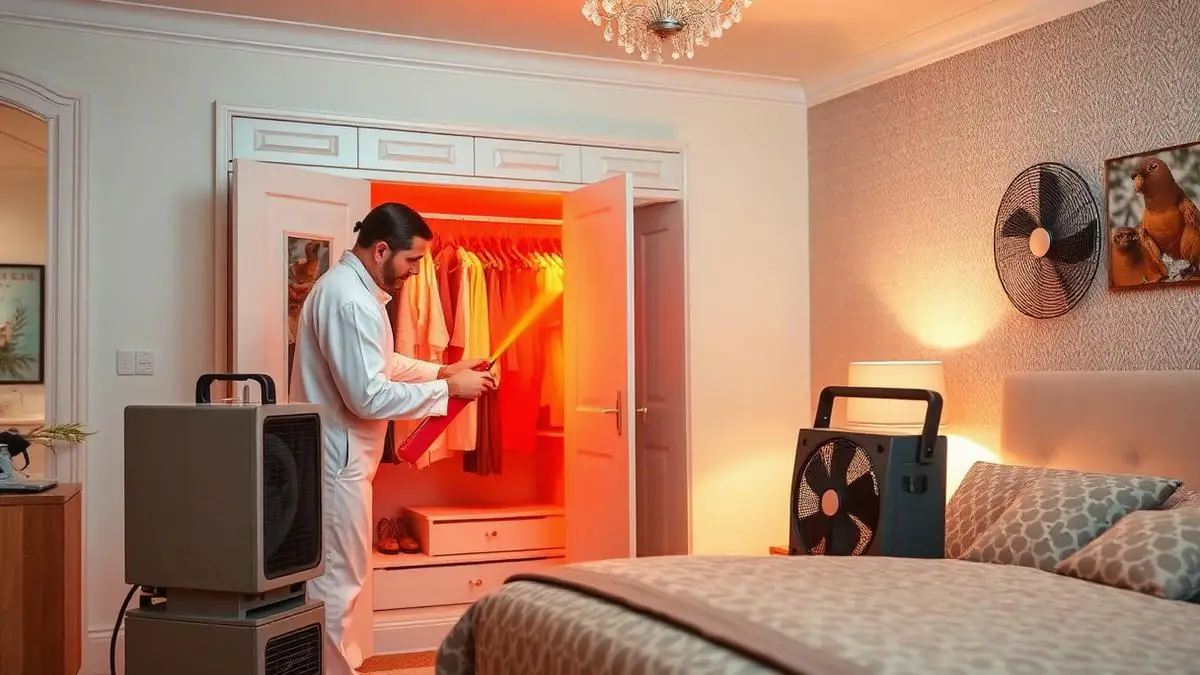
Heat treatment works differently. By raising the temperature of the affected rooms in your Bridge CT4 property to 60–65°C and holding it there, every life stage of the moth is destroyed at the same time. Adult moths, larvae, pupae and eggs cannot survive — so the infestation ends in a single day, with no chemical residue on your clothing, carpets or upholstery.
The benefits of chemical-free moth heat treatment in Bridge
- No chemicals on your clothing or textiles. Nothing is sprayed onto wool, cashmere, silk or carpets — safer for Bridge families, pets and anyone with allergies or asthma.
- Reaches hidden larvae. Heat penetrates deep into wardrobes, drawers, mattresses, rugs and behind fixtures where sprays cannot reach.
- Destroys eggs inside fibres. Eggs laid inside fabric and carpet fibres are reached by heat, but rarely by sprays.
- Single visit. Most moth problems in Bridge are resolved in one day — not weeks of repeat chemical visits.
- Protects delicate textiles. Wool, cashmere, silk carpets and antique fabrics are treated without physical damage or chemical exposure.
Moth heat treatment coverage in Bridge CT4
Moth heat treatment preparation checklist
Fill in your details, tick items off as you go, then print or email the completed form to us to approve before your Bridge treatment.
Open the checklistHow to identify a moth infestation in your Bridge home
- Small flying moths — cream or buff coloured adults seen fluttering around wardrobes, hallways or carpeted rooms.
- Silk webbing or small cases — clothes moth larvae spin silk tubes; case-bearing moths drag a small fibre case across surfaces and skirting boards.
- Larvae in wardrobes — small cream/white caterpillars (up to 10 mm) on garments, in folds and inside seams.
- Bare patches in wool carpets — irregular thin patches or holes, often under heavy furniture or along the edges of rooms.
- Holes in knitwear and wool blankets — small irregular holes in cashmere, wool jumpers, throws and stored bedding.
What a Bridge moth treatment visit looks like
1. Inspection and survey
We confirm the species, locate larvae and damaged textiles, and identify the most heavily affected rooms in your Bridge CT4 property — typically bedrooms, wardrobes, under beds and rooms with wool carpets.
2. Preparation check
We walk through the property with you to confirm the checklist has been completed — especially hanging clothing on rails in the largest room so heat can circulate freely around every garment.
3. Deployment
Industrial heaters and high-volume fans are positioned to distribute heat evenly. Door gaps are sealed and wireless temperature sensors are placed in the coolest spots.
4. Ramp and dwell
Air temperature rises to 60–65°C and is held once the coldest sensor reaches target. We monitor continuously with thermal imaging and probes to ensure no cold pockets remain.
5. Cool-down and handover
Equipment is removed, the property cools to a safe temperature, and you receive a treatment report plus aftercare guidance to help prevent re-infestation in Bridge.
Bridge moth FAQs
Carpet and clothes moths in Bridge: a local damage guide
Older homes near Bridge town centre are particularly prone to carpet moths because of the natural wool and silk in fitted carpets, runners and antique rugs. Short-term lets and Airbnb stock near Bridge town centre mean a high turnover of guests, suitcases and bedding — the single biggest local driver of repeat callouts. This short guide explains what the damage looks like, how the lifecycle works, and why heat is the only fully eradicating treatment.
Which moth is actually eating your Bridge carpet
Almost every Bridge infestation is one of two species: the case-bearing clothes moth (small grey-brown larvae in tiny silk "cases" on carpet edges) or the common clothes moth (pale larvae spinning loose webbing in wardrobes). Both eat keratin — wool, silk, cashmere, feathers — and both prefer the still, dark spots under furniture in homes near Bridge town centre.
Early warning signs in a Bridge property
- Bald patches on wool carpets under sofas, beds and inside fitted wardrobes.
- Holes in jumpers, suits, dresses and scarves — often only one or two items hit first.
- Fine webbing or grain-like droppings along skirting boards.
- Live larvae: 6–10 mm, cream-coloured, sometimes inside a small silk tube.
- Small grey-gold adult moths fluttering up walls when curtains are drawn.
Why pheromone traps alone won't work
In Bridge we regularly inherit jobs where the household has been running traps for a year and the damage has still got worse. Traps catch the obvious bit — the flying males. The hidden 95% (eggs, larvae, pupae) needs heat to finish off in one pass.
Action steps before our team arrives in Bridge
- Stop hoovering the affected room — it spreads eggs to clean areas.
- Bag up wool/cashmere items and keep them sealed until treatment day.
- Don't apply mothballs to children's bedrooms — they're a respiratory irritant.
- Photograph damaged items for any contents insurance claim.
Quick questions from Bridge households
How long does a moth treatment take in Bridge?
A typical Bridge job takes 4–6 hours from arrival to handover, including the full kill cycle and cool-down.
Can I keep my clothes in the wardrobe?
Yes — leaving them in place is preferred, so any eggs or larvae on the fabric are killed at the same time.
Bed bugs in Bridge? Speak to a specialist today.
One visit. No chemicals. Guaranteed eradication of bed bugs and eggs. Call now for a no-obligation quote — most jobs booked within 48 hours.