Flea Heat Treatment in Longbridge B31
Single-visit, chemical-free thermal treatment that kills fleas, larvae, pupae and eggs deep inside carpets, rugs, pet bedding and upholstery across Longbridge and the wider Birmingham area.
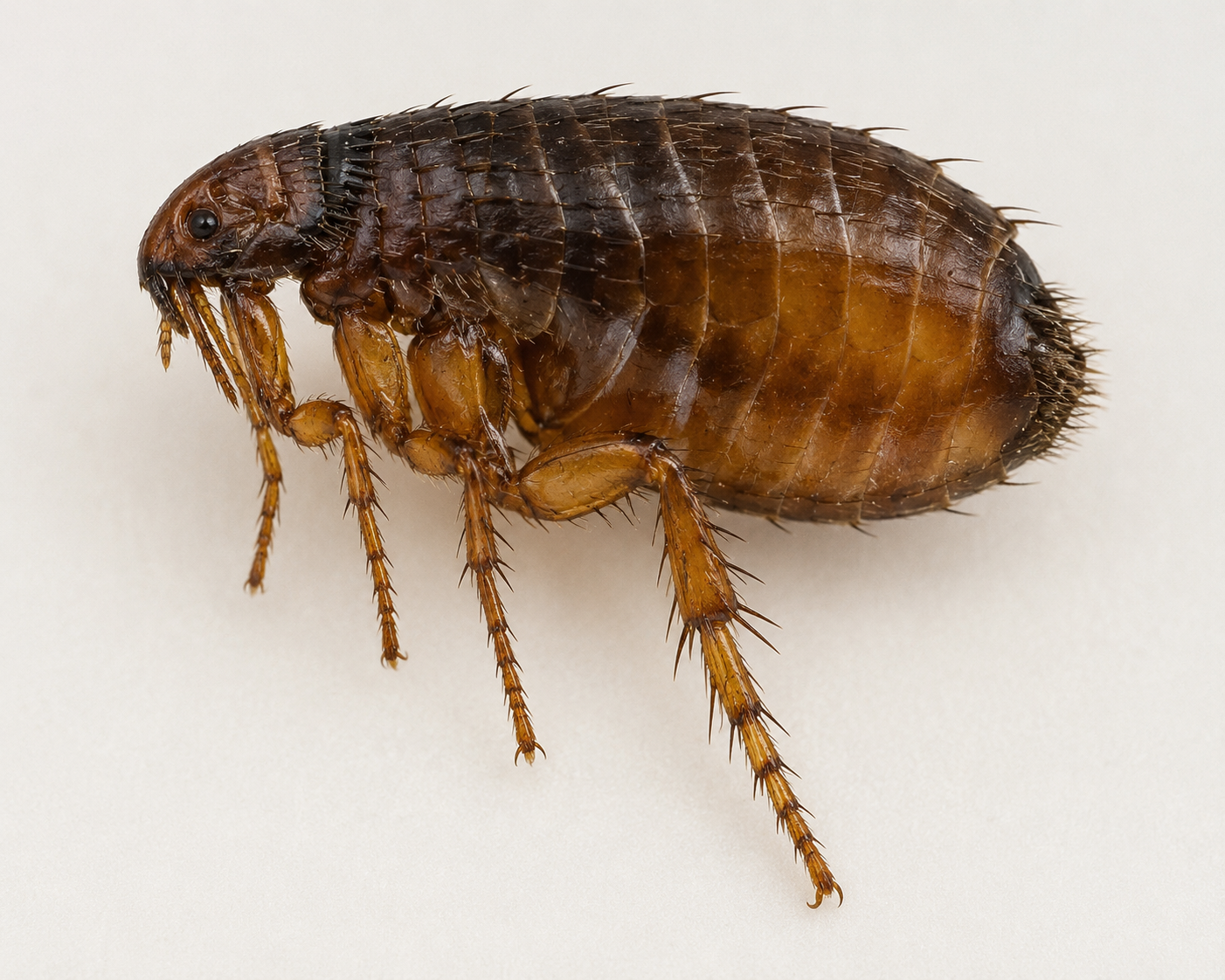
- Cat FleaCtenocephalides felis
- Dog FleaCtenocephalides canis
- Human FleaPulex irritans
- Bird FleaCeratophyllus gallinae
Why heat treatment is the best flea solution in Longbridge
Fleas are one of the most persistent household pests in Longbridge B31 homes. The adult fleas you see on pets are only around 5% of the infestation — the remaining 95% lives as eggs, larvae and pupae buried deep in carpet pile, rugs, pet bedding and upholstery.
Because pupae are protected by a sticky silk cocoon, conventional sprays rarely kill them in Longbridge properties. Survivors emerge days or weeks later and the cycle starts again. That's why so many Longbridge families end up paying for repeat treatments without ever fully clearing the home.
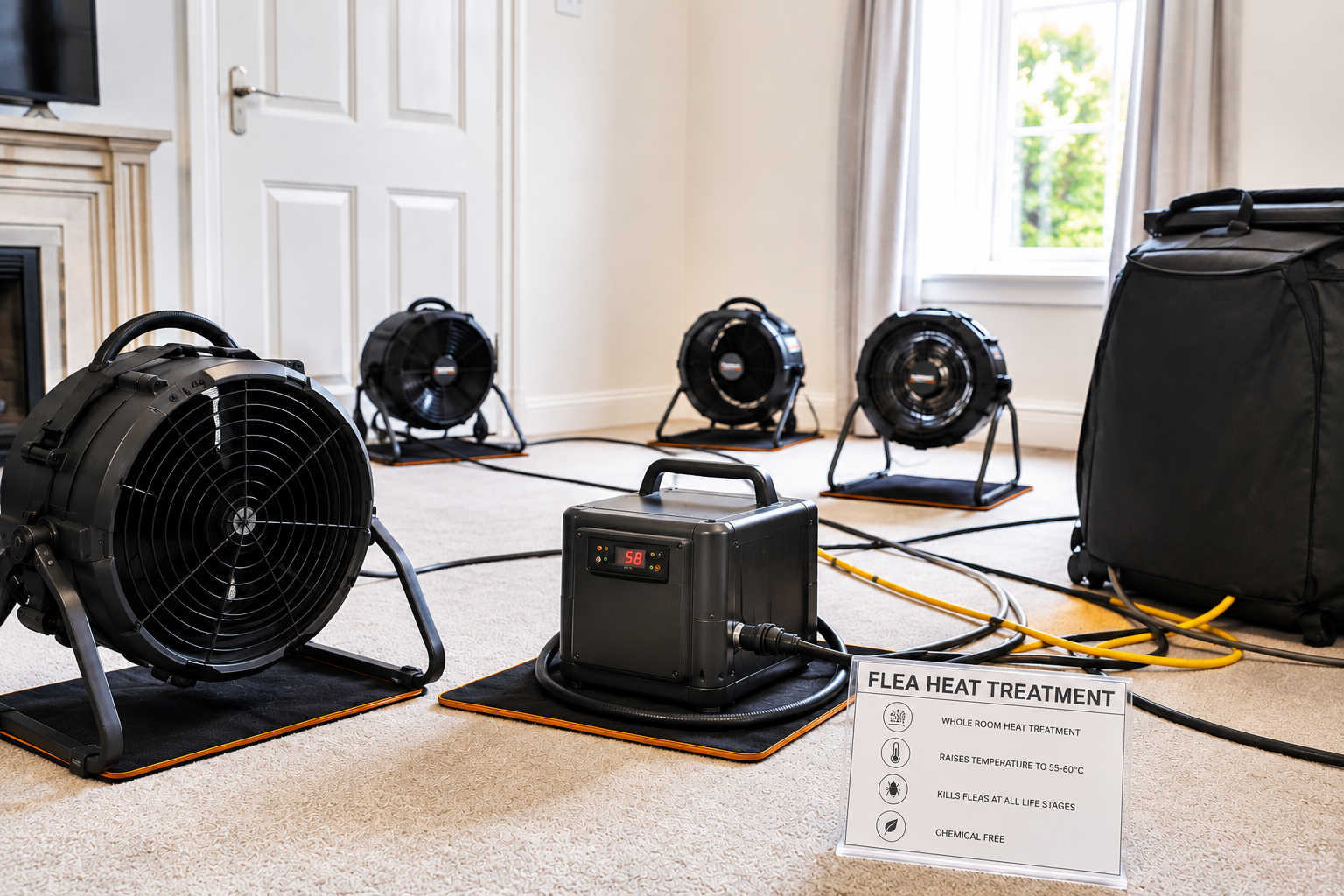
Heat treatment works differently. By raising the temperature of the affected rooms in your Longbridge B31 property to 60–65°C and driving heat down into the carpet pile with high-volume floor fans, every life stage of the flea is destroyed at the same time. Adult fleas, larvae, pupae and eggs cannot survive — so the infestation ends in a single day, with no chemical residue on your floors, sofas or pet bedding.
The benefits of chemical-free flea heat treatment in Longbridge
- No chemicals on your floors or pet bedding. Nothing is sprayed onto carpets, rugs or sofas — safer for Longbridge families, pets and anyone with allergies or asthma.
- Reaches hidden pupae. Heat penetrates the protective cocoon that sprays cannot touch — the single biggest reason chemical flea treatments fail.
- Destroys eggs in the carpet pile. Eggs roll down to the base of the pile where vacuuming and sprays miss them. Heat reaches every fibre.
- Single visit. Most flea problems in Longbridge are resolved in one day — not weeks of repeat chemical visits.
- Safe for textiles. Carpets, rugs, sofas and pet bedding are treated without physical damage or chemical exposure.
Flea heat treatment coverage in Longbridge B31
Flea heat treatment preparation checklist
Fill in your details, tick items off as you go, then print or email the completed form to us to approve before your Longbridge treatment.
Open the checklistHow to identify a flea infestation in your Longbridge home
- Pets scratching and biting — persistent scratching, restless behaviour and biting at the base of the tail are classic signs on dogs and cats.
- Bites at ankle level — small red itchy bites in clusters or lines, usually on lower legs and ankles, especially after sitting on the sofa or walking on carpet.
- Flea dirt — tiny black specks in pet fur, on bedding or on light-coloured carpet that turn rusty red when dampened on white tissue.
- Adults jumping from the carpet — fleas leaping from carpet pile onto white socks or trousers, especially when a room has been empty for a few days.
- Eggs and larvae — tiny white eggs and small white legless larvae deep in pet bedding, carpet pile and along skirting boards.
What a Longbridge flea treatment visit looks like
1. Inspection and survey
We confirm the species, locate the most affected carpets and pet sleeping areas, and identify the rooms in your Longbridge B31 property that need the highest heat exposure.
2. Preparation check
We walk through the property with you to confirm the checklist has been completed — especially that floors are fully cleared so our floor fans can drive heat straight into the carpet pile.
3. Deployment
Industrial heaters and high-volume floor fans are positioned to push heat down into carpets, rugs and pet bedding. Door gaps are sealed and wireless temperature sensors are placed in the coolest spots.
4. Ramp and dwell
Air temperature rises to 60–65°C and is held once the coldest sensor reaches target. We monitor continuously with thermal imaging and probes to ensure no cold pockets remain — including inside pet beds and under furniture.
5. Cool-down and handover
Equipment is removed, the property cools to a safe temperature, and you receive a treatment report plus aftercare guidance to help prevent re-infestation in Longbridge.
Longbridge flea FAQs
Fleas in Longbridge: why they keep coming back and how heat ends it
Most Longbridge flea problems we treat aren't actually about the pet — they're about the carpet. Commuter properties around Longbridge pull in luggage from across the UK and Europe every week, so even very clean homes get hit. Eggs and pupae in the flooring outlast every shampoo and spot-on treatment, which is why infestations come back two weeks later.
Why a Longbridge flea problem keeps coming back
Only about 5% of a flea population are the adults you actually see. The other 95% are eggs, larvae and pupae buried in carpet pile, under floorboards and inside pet bedding. In Longbridge homes — especially carpeted Victorian terraces near Longbridge town centre — those pupae can sit dormant for months and hatch the day you think you've won.
Fleas vs bed bugs in Longbridge: how to tell
- Bites in groups of three or four, almost always on ankles and lower legs.
- Fast-moving 2–3 mm dark brown insects you spot on white socks or bedding.
- Tiny dark specks ('flea dirt') in pet bedding that turn red-brown on wet kitchen roll.
- Pets scratching at the base of the tail, even after a vet flea treatment.
- Bites concentrating around sofas, rugs and pet beds rather than mattresses.
Why heat works when sprays fail
The reason heat beats chemicals on fleas in Longbridge is the pupal cocoon: it's waterproof, chemical-proof, and built to survive months of waiting. Heat penetrates it. Sprays don't.
Prep steps for your Longbridge flea treatment
- Keep treating the pet — heat clears the property, not the animal.
- Wash pet bedding at 60°C the morning of treatment.
- Don't hoover the day before — the vibration triggers pupae to hatch early, which actually helps the treatment.
- Remove fish tanks, candles, aerosols and pressurised cans from treatment rooms.
Quick questions from Longbridge households
Will heat treatment work on a top-floor flat in Longbridge?
Yes — flats are actually easier to heat evenly than houses. Most Longbridge flat treatments are completed in a single afternoon.
Will my fish tank be OK?
Fish tanks must be moved out of the treated room before we start. We'll confirm this on the prep call.
Bed bugs in Longbridge? Speak to a specialist today.
One visit. No chemicals. Guaranteed eradication of bed bugs and eggs. Call now for a no-obligation quote — most jobs booked within 48 hours.